Hi, I’m Shuko.

Between work, studying, and house chores, finding time to practice can be tough.
Sometimes I think “I’ll do it tomorrow,” and before I know it, my next lesson is just around the corner!
It’s normal to feel unsure about how much practice you should be doing or whether you’re improving at all.
In this post, I’ll walk you through my personal practice routine — the one I use between lessons.
Since I take lessons from a saxophone teacher, the way I practice is very similar to how saxophonists train in general.
How Often and How Long I Practice
On busy weeks, I practice about 3–4 times a week, with each session lasting up to an hour.
Of course, some weeks I’m too tired or just not in the mood, so I might only practice 1–2 times — and that’s okay.
One great thing about the Aerophone is that you can do all your practice at home, so the threshold for starting is low.
Once you start, you might even find yourself totally absorbed before you know it!
While more practice generally leads to faster improvement, missing a couple of days doesn’t make you lose everything you’ve learned.
So don’t worry too much about “practicing every day” — especially if you’re enjoying this as a hobby.
Staying motivated is the key, and here are the things that help me:
- Working on things my teacher pointed out before the next lesson
- Progressing through a song or exercise and feeling that little win
- Having family listen to my playing at a small performance
Since lessons give me clear feedback and goals, they are a HUGE motivation — much more so than just practicing alone.
My Practice Menu
Here’s the routine I usually follow:
Long Tones
I start with long tones. This means holding one note for about four beats and working through all the dynamics and registers.
Although I usually start in C major, I’ll also use F major or G major sometimes.
At first, I just played without thinking, but after doing this repeatedly, I started to notice things like:
“My shoulders are tense today…”
“My breath feels easier today…”
“My posture is off…”
On days when something feels off, I don’t push myself too hard — I simply shorten the session and come back refreshed next time.
Scales (Scale Practice)
I use a saxophone training book for this part. I typically practice the 1st, 3rd, and 5th notes of each scale — with slurs (smooth transitions) and tonguing (using the tongue to articulate notes).
Recently, I’ve also started practicing swing-style slurs and tonguing because I’ve been getting into jazz!
When I began, I practiced all patterns in C major. But as more keys came into play, I couldn’t practice everything every day.
So now I rotate: one day I focus on the 1st pattern, the next I work on the 3rd, and so on.
Sometimes I pass a section in one lesson, but other times it takes three tries — that’s just part of the process. I take my time, and slowly work up the tempo as I improve.
Etudes
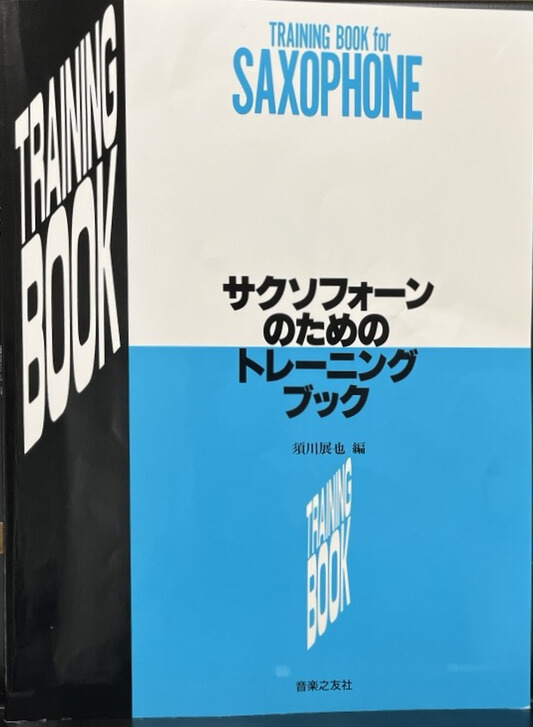
I use “Lacour: 50 Easy and Progressive Etudes for Saxophone, Volume 1.”
Each etude is short, but very dense in content, allowing you to work on both technique and musical expression at the same time.
I usually spend about one to one and a half months on a single etude, although there was one that took me almost three months.
During that time, I started to feel discouraged and wondered if I would ever improve any further.
Surprisingly, though, there was a final breakthrough near the end — and when I was finally able to play it well and pass, I felt truly happy and relieved.
When I was learning piano years ago, I absolutely hated basic exercises.
But now that I’ve returned to music later in life, I’ve found that I actually love fundamental practice more than anything.
Practice Songs
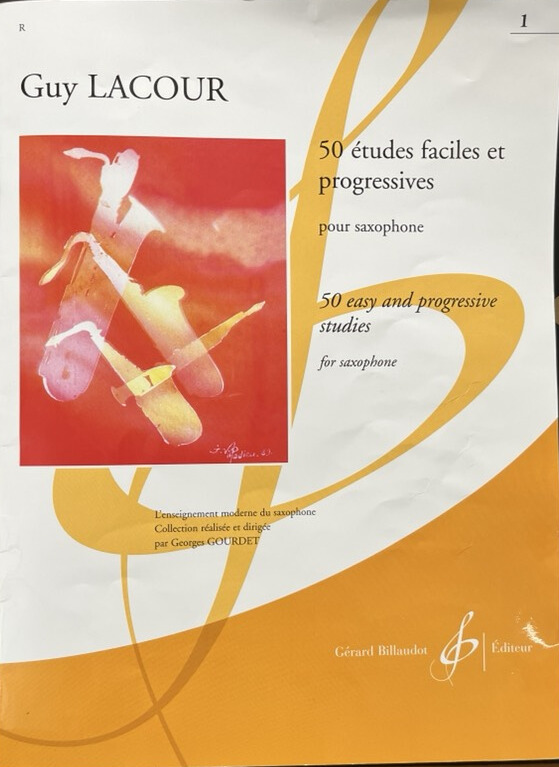
For songs, I pick ones that come with a backing track CD or accompaniment, and that suit my level.
Instead of buying full songbooks, I sometimes buy individual sheet music online — which works just fine! You can use services like print-gakufu.com or elise.com to find pieces one by one.
Towards the end of the session, my lower lip sometimes starts feeling sore from the mouthpiece, so I don’t overdo it — I’d rather stop while it’s still fun!
Books and Practice Tools
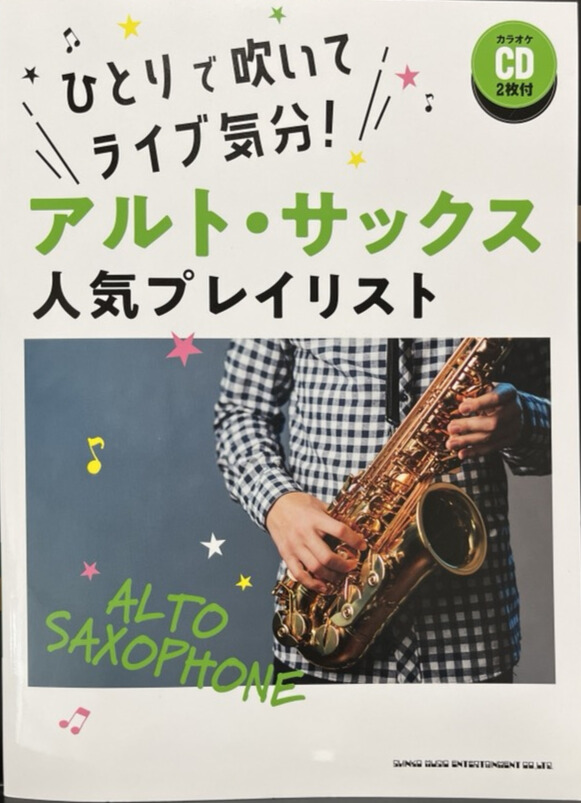
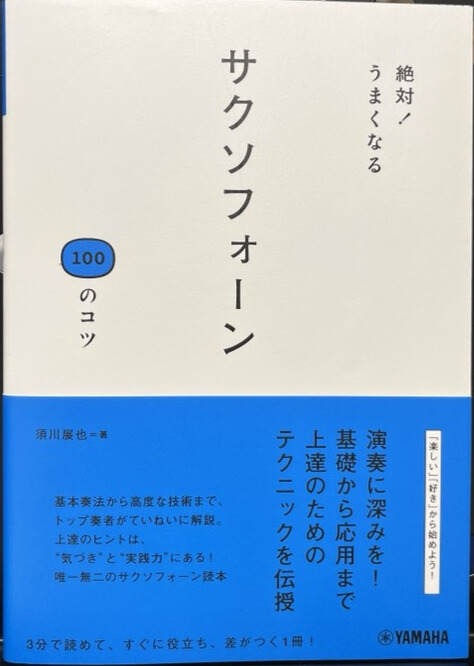
Besides lessons, I also refer to a saxophone book called “Saxophone 100 Tips to Improve Absolutely!” by Nobuya Sugawa.
Although it’s a saxophone book and not specifically written for digital wind instruments, it’s excellent for:
- Building effective practice habits
- Learning performance techniques
- Mental aspects of improving your playing
There are 100 short, easy-to-digest tips, so you can read just what’s useful without feeling overwhelmed.
Summary
This is the routine I use in my daily Aerophone practice.
Finding time between work and life can be tricky, but cutting down screen time helps me make space for it.
Improvement doesn’t happen overnight — but steady, consistent practice leads to real progress.
Getting feedback from a teacher and setting short-term goals makes it much easier to stay motivated. If you can, I highly recommend lessons.
Of course, everyone’s practice style is different, so the most important thing is finding what works best for you!
Thanks for reading — let’s enjoy Aerophone practice together!
— Shuko