Is the Aerophone Difficult? The Honest Truth About the Walls Beginners Hit
🌐 Read this article in Japanese(この記事を日本語で読む)
Hi, I'm Shuko — a music blogger from Japan.

Is the Aerophone actually difficult? Is it really a good fit for beginners?
In my last article, I talked about why the Aerophone is so beginner-friendly. But what actually happens once you start playing?
This is the side the official site and most reviews don't tell you much about. Here, I'll share my honest experience as a total wind-instrument beginner.
If you're on the fence about starting, I hope this helps you decide. Please read to the end!
* This page may contain affiliate links.
Contents
Why It Was Harder Than I Expected
Let me start with my honest first impression after picking up the Aerophone.

"It's harder than I imagined" — that's my honest feeling as a wind-instrument beginner.
You might be thinking, "Wait — aren't you the one recommending the Aerophone because it's beginner-friendly?" Fair point! So why was there such a gap between my expectations and reality?
This is just my personal theory, but I think it's because we tend to underestimate the difficulty of things we've never experienced, while we can roughly gauge the difficulty of things we have tried before.
For example: running 100 meters in 10 seconds, becoming a professional soccer or baseball player, climbing Mount Everest. Very few adults would call any of these easy.
That's because most of us have run, played ball games, or hiked up a mountain. We know our own limits well enough to imagine just how extraordinary those feats are.
On the other hand, if you've never played golf, the brilliance of a pro golfer's shot may not really hit home. I only came to appreciate it after taking up golf myself.
When it comes to instruments, I've read that as many as 90% of people who take up the guitar quit within their first year.
Your favorite guitarist makes it look effortless — but when you actually try, it's incredibly hard, progress feels slow, and many people give up. That gap between the dream and the reality is probably part of the story.

To be honest, that was me too. I started out thinking, "An acoustic saxophone sounds difficult, but the Aerophone makes a sound the moment you blow — surely even a beginner can get pretty good at it."
And it's true: simply producing a sound is far, far easier than on a saxophone — you blow into it, and a note comes out. But playing musically is a completely different story.
Being able to make a sound easily and being able to play musically are two very different things — that's what I learned only after starting the Aerophone.
Once I realized that, I could finally imagine just how much practice the players I admire must have put in.
It was THIS hard?! And they make it look so easy!
Even so, as I kept practicing in my own way and climbed over one wall after another, I started to feel myself improving — and that's when the fun really kicked in.
"So this is what it means to pick up something new and learn it — it takes time," I often think to myself, savoring every tiny bit of progress.
The 4 Walls Wind-Instrument Beginners Run Into
Now let me get specific about exactly where I stumbled as a wind-instrument beginner.
If you already play the saxophone, the Aerophone reportedly feels quite natural — the key layout is only slightly different. What follows is written from the perspective of someone who had never played a saxophone, or any wind instrument, before.
Embouchure — getting your mouth position right
The Aerophone has a reed-style mouthpiece, so the first wall is the embouchure — how you hold the mouthpiece in your mouth.
Watch saxophone videos on YouTube or read saxophone blogs, and you'll find endless discussion about what makes a good embouchure. Even experienced players are constantly researching and refining theirs.
Building up muscles around your mouth that you've never used before takes real time. Air or saliva escaping from the sides of the mouthpiece, sore lips — I'm still working through trial and error myself.
Learning articulations and techniques
Sheet music is full of markings — slurs, tonguing, staccato, vibrato — and you need to learn how to actually play each of them.
For example, a slur means playing smoothly with no break between notes, and staccato means playing notes short and detached. I knew those two, but I had never even heard the word "tonguing."
Tonguing is the general term for controlling the airflow with movements of your tongue. It gives each note a clear, crisp beginning, and it's one of the fundamental techniques of wind playing.
Here's the thing: understanding a technique in words and actually coordinating your breath, mouth, and tongue are completely different things — it doesn't happen right away.
Reading books about soccer or baseball doesn't instantly make you good at playing them, right? It's the same idea.
Fingering that demands precision
The key layout itself isn't that hard (side keys aside), but the Aerophone's sensors are extremely responsive.
If a finger lifts even slightly, or your press-and-release timing is a little off, you get no note, a delayed note, or the wrong note entirely. You need to move your fingers with real precision.
They're my own fingers, yet they often refuse to move the way I want — it can be genuinely frustrating. I've even hurt my fingers by getting stubborn and over-practicing.
Still, practice really does make it better, little by little, so I keep going without rushing.
Expressing music, not just making sounds
To repeat: making a sound on the Aerophone really is easy. Blow into it, and a note comes out.
But that's not the same as the playing being easy — something I only realized by actually doing it.
Controlling your breath, moving your mouth, tongue, and fingers exactly as intended, expressing every marking in the score... you're doing an amazing number of things at the same time.
Yet things that felt hopelessly difficult at first became possible as I chipped away at them bit by bit. Humans are pretty amazing that way.
When you can finally express a song in your own beginner way, the sense of achievement is wonderful — and it's so much fun.

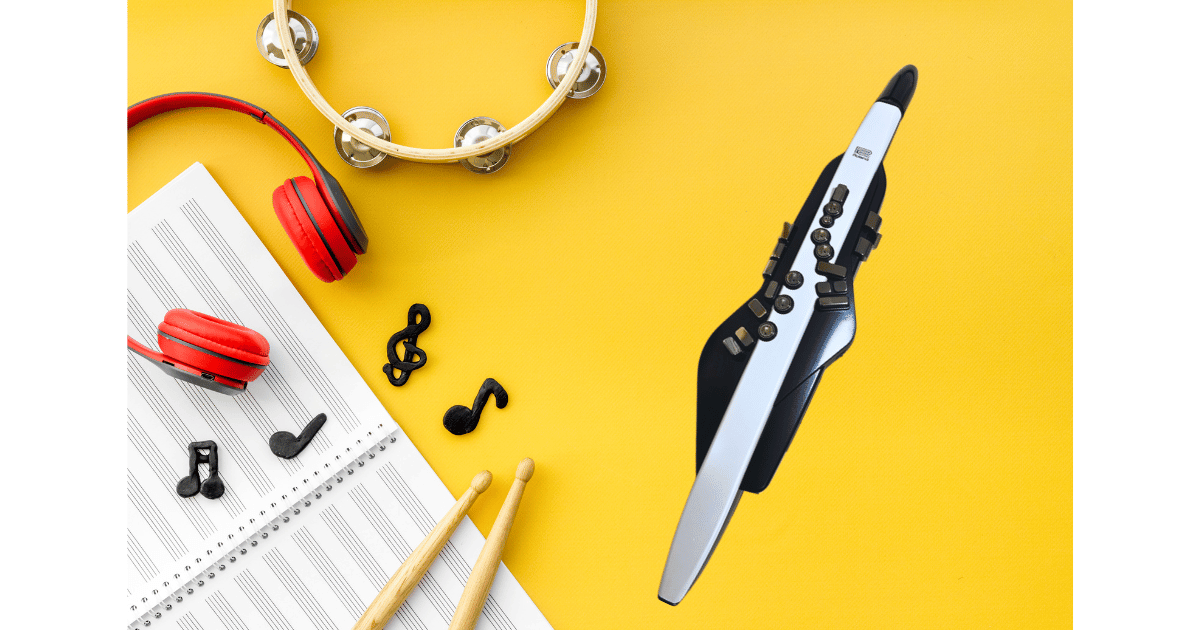
Roland Aerophone AE-20
See full specs and details on the official page:
Roland Aerophone AE-20 — Official Product Page
Summary
In this article, I shared the honestly difficult side of the Aerophone from a beginner's perspective.
As we grow older, we get fewer chances to try new things — and with so much information at our fingertips these days, it's easy to become armchair experts.
We watch a YouTube video and never actually give it a try, or we convince ourselves something looks easy. You never know how hard something really is until you try it yourself.
And unless you keep going, you never get to experience the joy waiting on the other side.
The Aerophone is a wonderfully approachable instrument — easy to start and easy to stick with. I focused on the difficult side today, but my feelings haven't changed: I want as many people as possible to discover how wonderful it is.
If you're wondering whether to start the Aerophone, please give it a try. It's difficult — and it's SO much fun. Come join the Aerophone family, wherever in the world you are ♪